Hawa Bodol OST – A Breath of Fresh Air

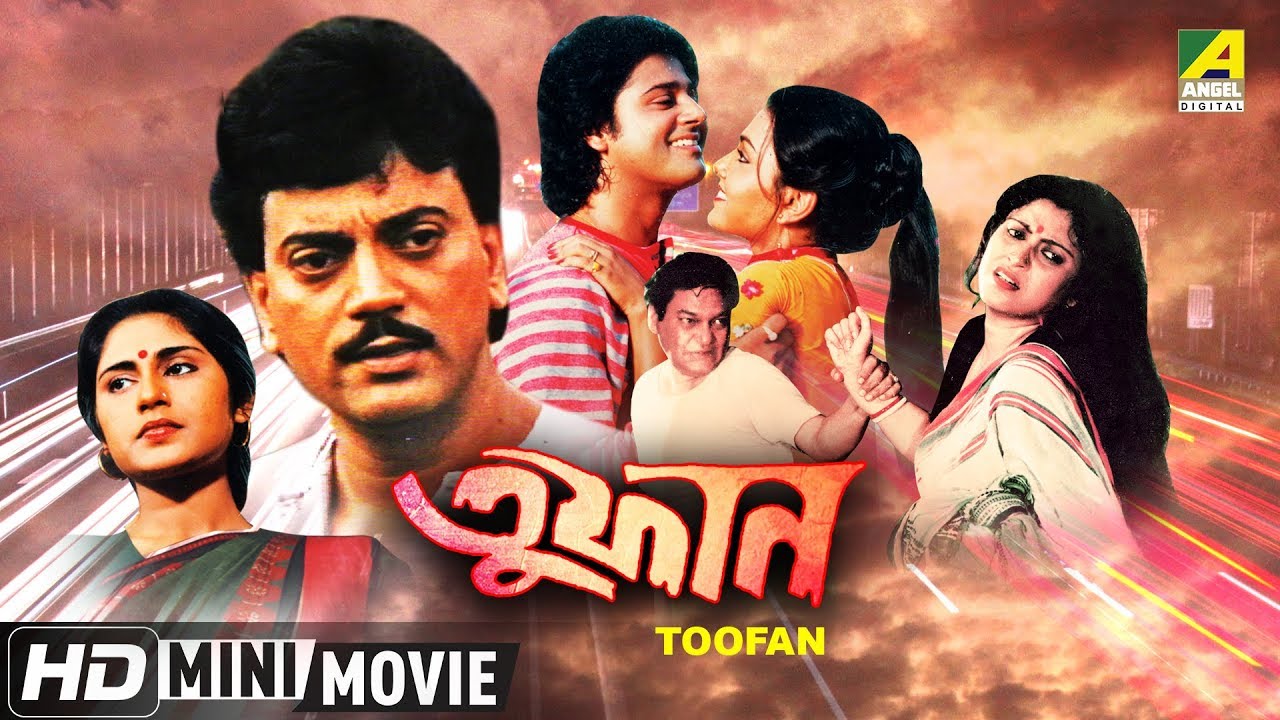
Music ReviewIt was a mere accident a few days ago when i bumped into Parambrata Chatterjee’s tweet promoting the jukebox of the songs from his latest directorial venture Hawa Bodol. Having watched the trailer earlier, and knowing that the film comprises a Rabindrasangeet sung by one of my favourite singers, i immediately clicked on the link. And boy oh boy, i was not disappointed.

In an earlier blog post, i had written that the previous decade had seen the rebirth of Bengali film music, thanks to Jeet Ganguly among other composers. Indradeep Dasgupta has surely taken the legacy forward with some mind blowing compositions for Hawa Bodol. He has already left an example of his acumen with the mesmerising tracks of Jani Dekha Hawbe. Hawa Bodol simply announces that Indradeep has arrived.

Hawa Bodol, when translated, means winds of change. Doing full justice to the name of the film, the OST of the film is like a breath of fresh air from the monotonous remakes or loose copies of South Indian or Hindi film songs. The composer has achieved a no-mean-feat in Hawa Bodol by bringing together Vishal Dadhlani, Mohan Kannan (of Agnee band) and Suidhi Chouhan, and made them sing in near flawless Bangla; their polished pronunciation could put even some “tyansh” Bongs into a bout of inferiority complex. Arijit Singh is no surprise – his talent was well expressed in 2012, with his songs in Barfi and Bojhena Se Bojhena. Hawa Bodol is an icing on the cake for Arjit fans. However, the cherry on the cake in the album is undoubtedly “Mor Bhabonare” sung by Sahana Bajpeyi.

The OST:

1. Ghore Ferar Gaan : Nostalgic lyrics, disco-feel, and Vishal Dadlani’s voice – the combination is magical. Anybody living away from Kolkata would surely get the drift, the longing to return to the nest.

2. Din Khon Mapa Ache : The song reminded me immensely of “Thik Thakis” from Jani Dekha Hawbe. Casual lyrics, Almost “unplugged” rendition by Arijit, and the touch of simplicity – a perfect mix of emotions.

3. Mor Bhabonare (Duet) : The only disappointment in the whole album. Apparently Sahana and Saptarshi’s portions weren’t mixed well and the song appeared extremely forced. Saptarshi’s pronunciations defy the bard’s original ideas and come across as ear-sore.

4. Bhoy Dekhas Na Please : Sunidhi’s Bangla accent is amazing. Had she sung the high-scale portions with little less effort, and at a lower pitch, the song could have been a marvel. However, it is at par with Shreya’s Roopkatha from Aparajita Tumi.

5. Mone Porle : The song remains etched in your memory for two reasons – the soft jazz and Arijit’s haunting voice.

6. Bhoy Dekhas Na (Agnee) : Mohan Kannan is a rockstar. His amazing vocals in the higher octaves breath life into the words and you can actually visualise a full-moon night, and feel the pain of waiting for your loved one. Sung in a typical Agnee style, the song steals your heart.

7. Mor Bhabonare (Female) : Ever since i heard her songs on Youtube, i had been a big fan of her. She sings Rabindranath’s songs the way it should be – experiment with the music, but keep the tune and words intact. The beats of madol in the background of Sahana’s catchy voice just send you into trance.

8. Mor Bhabonare (Male) : Sapatarshi does much better than the duet and does justice in his own way to the bard’s words.

9. Bhoy Dekhas Na (Male) : Arijit steals the show again. The unplugged version of Sunidhi’s song is as enchanting as the female version. The words hit you where they should and make a strong impact in your heart.

All in all, Hawa Bodol is a cult album in Bangla film music history, after Antaheen. Here’s wishing to hear more melodies from Indradeep Dasgupta in the future.

My rating : 4/5.

You can listen to the songs here

Disclaimer : All videos/images used in this post have their own copyrights.

The Oath of The Vayuputras – A Review

Shiva TrilogyThe third installment in the Shiva Trilogy by Amish Tripathi sets off in Panchavati where Evil is revealed to the Neelkanth, leading to the culmination of years of expedition and sets of a chain of conspiracies and a series of violent wars that changes the course of the history of India. In case you did not grasp what i meant in the previous sentence, you are probably unknown to the world of Meluha. Set in India, millions of years ago, the Shiva trilogy chronicles the transformation of a Tibetan barbarian, Shiva, into the Lord Neelkanth, an avatar of Lord Rudra himself, on whose shoulders lay the task of ridding the nation of The Evil.

Right from The Immortals of Meluha and throughout The Secret of the Nagas, Shiva has tried to put the pieces of the puzzle together to solve the jigsaw – what is Evil? Led onto the task by the king of Meluha, Daksha, Shiva had been chasing the Nagas, led into believing these deformed creatures were the root of all that was wrong with India. As we see in the second book, the real conspirators are revealed, and the Queen of the Nagas happens to the sister of Shiva’s wife, Sati.

Amish Tripathi’s great insight into the ancient Indian philosophy and scientific treasure-trove is worth saluting. As he himself concedes in the last paragraph of the book, these tenets of knowledge have transgressed into myths, because people cannot accept the fact that wisdom, of such high calibre, could have existed in India at such primitive times. History will be indebted to Tripathi for reclaiming the lost honour for Indian mythology.

A lot of people who have read the book, or are reading the book currently, have told me that Vayuputras is not as pacy as the rest of the books in the trilogy. Even the climax is not utterly convincing. I agree partly with my friends. I finished reading Vayuputras in 26 hours, had it not been “pacy” i wouldn’t have been hooked onto it, would I? The Evil is revealed in the first chapter itself, and we know the identity of the conspirators against Neelkanth from the second book itself. The “element of surprise” is quite daftly compensated by the “thrill factor”. What happens next, the question keeps us hooked onto the chapters, forcing us to turn pages at breathtaking pace.

Anyone who is acquainted with Hindu mythology, knows about Daksha Yajna and Sati’s Deha Tyag. The event has been described so beautifully in the novel that i could not hold back my tears during Shiva’s lament for Sati. Yes, the culmination of the grand trilogy might seem a bit simplistic and dull to many, but what it teaches us is nothing short of epochal. The Oath of The Vayuputras, for me, is a sacred book of philosophy that holds the key to thriving civillizations and peaceful societies – Good and Evil are two sides of the same coin; when good outlives its utility, it turns evil.

Generations to come will scarce believe that a man of Shiva’s stature walked the lands that we call India. His life is a lesson in itself, his greatness have transformed him from a mere mortal and accorded him divine status. Isn’t that what sets us apart from rest of the world – our actions.

Har Har Mahadev (God Resides in Everyone)!

My Rating – 4/5 

Oath of the Vayuputras

DISCLAIMER : All images used in the post have their respective copyrights.

Book Review : Chanakya’s New Manifesto

Chanakya's New ManifestoAt the stroke of the midnight hour, in August 1947, when India became a free nation, little did the founding fathers of this democracy imagine that the country would come to brink of a crisis in less than a century, and the very ideals on which this great nation was founded, would be challenged by politicians with vested interests, just to stick to their thrones. Six and a half decades have passed and India still battles poverty, hunger, communalism, social malaise like discrimination based on caste; the economic structure of the nation is in shambles – crony socialism and sham capitalism has led to the nation being pushed to the walls. The people of this nation have lost faith in the leaders, thanks to rampant corruption, and i daresay, hardly any office-bearers in current ruling class display any statesman-ly quality.  The sorry state of the nation reminded me of a poem by Henry Louis Vivian Derozio, and i quote few lines from it:

Thy eagle pinion is chained down at last,

And groveling in the lowly dust art thou:

Thy minstrel hath no wreath to weave for thee

Save the sad story of thy misery!

What then can rescue this great nation and put her back into reckoning as a world power, restore the lost ideals of democracy and imbibe a confidence among the people for the state? Ace writer Pavan K Varma tries to find the answers to India’s current problems in the Arthashastra. There is a popular misconception that Arthashastra, conceived by Kautilya (or Chanakya, the advisor to great Mauryan King Chadragupta), deals only with economic policies. But as the author argues, the book is a treasure trove of governance and politics.

“The Arthashastra consists of about 6000 shlokas and sutras. It deals systematically with the subjects of effective governance, the welfare of people, economic properity, the qualities of a king, the competence of his ministers, the duties of its officers, administrative acumen, civic responsibility, the importance of the rule of law and an efficacious judicial system, measures to effectively curb corruption, dandaniti or the policy of punishment for wrongdoers, the conduct of foreign policy, war planning and preparedness, the strategy of alliances and the supremacy of national interest above anything else.”

Pavan K Varma, after a brief description of the crisis at home, takes up areas that need immediate attention and fixing and goes on to list out the measures that can help in carving a better nation for ourselves. The areas discussed were – Governance, Democracy, Corruption, Security, Inclusive Society – as we can see these encompass almost the entire spectrum of the duties of a ruler. I choose not to discuss the measures suggested by the author, in order not to spoil the pleasures for others, when they read the book for the first time. A seasoned bureaucrat that Mr Varma is, it is not unexpected that he does justice to the cause he espouses – his suggestions, although one might not agree with at times, do have a solid bearing on your mind.

History they say is written by victors. But it is always opportune to delve into the past and seek answers from experience to build a better future. Indian history is a myriad of experiences. Chanakya’s acumen in governance and politics is beyond doubt, thanks to the caliber with which he foiled Alexandar’s invasion and sought his revenge with Dhanananda and instated Chandragupta as the king. Hope the charter of suggestions that Pavan K Varma has assembled in his new book, attracts the attention of those who yield power and India casts this spell of idle, static, absent governance away.

My Rating for Chanakya’s New Manifesto – To Resolve The Crisis Within India : 3.5/5

N.B.: This review is a part of the biggest Book Review Program for Indian Bloggers. Participate now to get free books!

Disclaimer : All Images Used In This Post Have Their Own Copyrights.

Show your Humanity, Kolkata

A few days back, when i was browsing through my Facebook timeline, chanced upon this picture. The description below, written by the person who posted the pic, says it all:

Many of us saw her pic in facebook. and I finally met her, Just outside Exide mod Haldiram’s, she was sitting and selling papad (1 packet for Rs 10). This Old fragile lady in her mid 80′s who has a paralyzed son at home and she is the only earning member of the family and definitely too proud to beg. Her clean clothes, sophisticated manners tells the unspoken stories of her aristocracy of yesteryear. one well dressed Man took one packet of papad and gave Rs 100 and vanished quickly in the crowd before she even got a better look at how much he has paid. And he is not an exception, ppl keep buying stuffs from her regularly even though they do not use them. Felt proud that hearts still beat and bleed in this city of joy and all of us has not turned into stones yet.

I was reminded of a similar old lady, who used to come to our home once in a fortnight/month to sell moa. “Moa Dida” we used to call her. One day she stopped coming, she was no more. There are several women like her who have braved old age and kept their self-esteem intact by earning their own living. I only hope she receives a little help from the government or any noble-hearted individual. I hope my city will not disappoint. Among all the Indian metros, Kolkata still has her heart in the right place.

Kolkata lady

Book Review – R.I.P. By Mukul Deva

Book ReviewThrillers on the lines of Sam Bourne, Fredrick Forsythe or Dan Brown are common place in any Indian bookstore these days. Breathtaking plots, incredible plots and semi-real contexts sum up most of the crime thrillers that i have come across of late. What sets Mukul Deva’s novel R.I.P. (Resurgent Indian Patriots) apart from the multitude of other offerings in the market? Nothing, really. And that is the U.S.P. of this book.

The very first chapter gets you glued to the plot, which moves at lightning speed. Although a work of fiction, the stark similarity to the current political discourse of India is evident. With half-hearted efforts by the author to give fictional names to people we always hear of in the news, the story begins with three political murders and how they change the course of history of the nation, at least in this fairy tale.

India is riddles with corruption, and thanks to the advent of alternate media in the recent past, we have been granted access to a vast resource of information. Public anger has reached a boiling point and often do we feel its time for action to make things work in this country. After a media-driven mass awakening 2 years back in Delhi, led by a “Gandhian” activist, the nation has slid back into a lull again, save the recent protests against Delhi Rape. Mukul Deva’s book is a reflection of this public anger.

Well etched-out characters and snazzy details make this thriller even more pacy and addictive. The writer’s background with the armed forces might have come in handy, because the small little details of guerrilla attacks and military warfare, as described in the book, would be known to someone who’s trained in it.

A group of ex-army-men decide to avenge the rampant corruption by politicians and restore the democracy back to the people. They decide to attack three influential yet corrupt people in the seat of power in the three wings of the Indian state. Without a shade of doubt their actions create ripples within the system and a massive manhunt is ordered against them. However, with immense efficiency, the group which calls itself RIP continues to evade arrest and carry out their biggest strike ever. To even imagine anything of that magnitude happening in reality sends shivers down my spine.

Struggling through several sub-plots – sex, anger, jealousy, death and sacrifice – R.I.P. finally manages to leave the reader in me satiated and wanting for more after i turn the last page. Just like Tagore had quipped “Sesh hoyeo hoilo na sesh” (it leaves the scent of the aromatic food in the mouth, making me crave for more). Undoubtedly, the novel is a good flight-time read and can be finished in five hours if you can read non-stop.

My Rating: 3.5/5 :-)

Disclaimer – All images used in this blogpost have their own copyrights.

N.B. – This review is a part of the Book Reviews Program at BlogAdda.com . Participate now to get free books!

Follow

Get every new post delivered to your Inbox.

Join 3,570 other followers